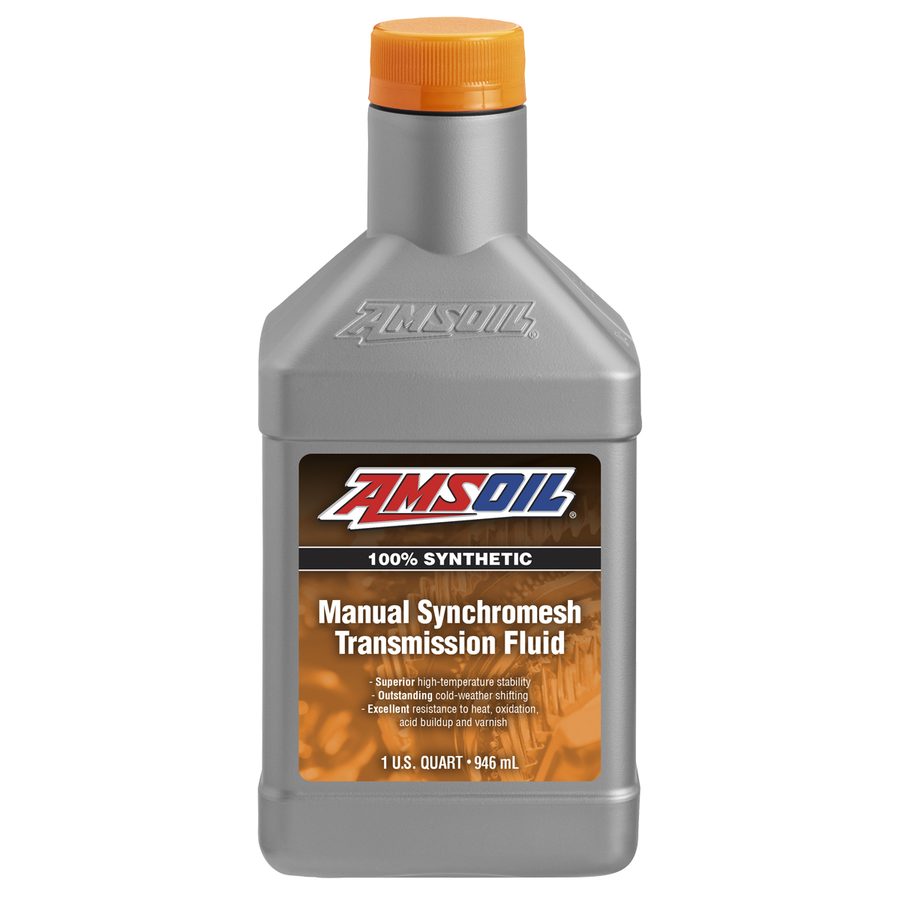
Manual Synchromesh 5W-30
5W-30 synchromesh fluid for manual transmissions and transaxles that call for a synchromesh grade. Protects brass synchronizers and keeps shifts crisp from cold start through hot traffic.
View product

AMSOIL manual transmission fluid protects the synchronizers and gear teeth that take the load on every shift. The synthetic formulas hold their film strength through cold starts, loaded hauling, and long hours under heat, so shifts stay crisp instead of turning stiff and vague.
The line covers 5W-30 synchromesh fluid for cars and light trucks, 75W-90 gear lube for manual transmissions and transaxles, SAE 10W, SAE 30, and SAE 50 powershift grades for heavy equipment, and long-life SAE 50 transmission oil. Choose the grade the application calls for, then compare specs and package sizes on each product page.
Confirm the match for the vehicle or equipment in the AMSOIL vehicle lookup guide, then compare the formulas below.
5W-30 synchromesh fluid for manual transmissions and transaxles that call for a synchromesh grade. Protects brass synchronizers and keeps shifts crisp from cold start through hot traffic.
View product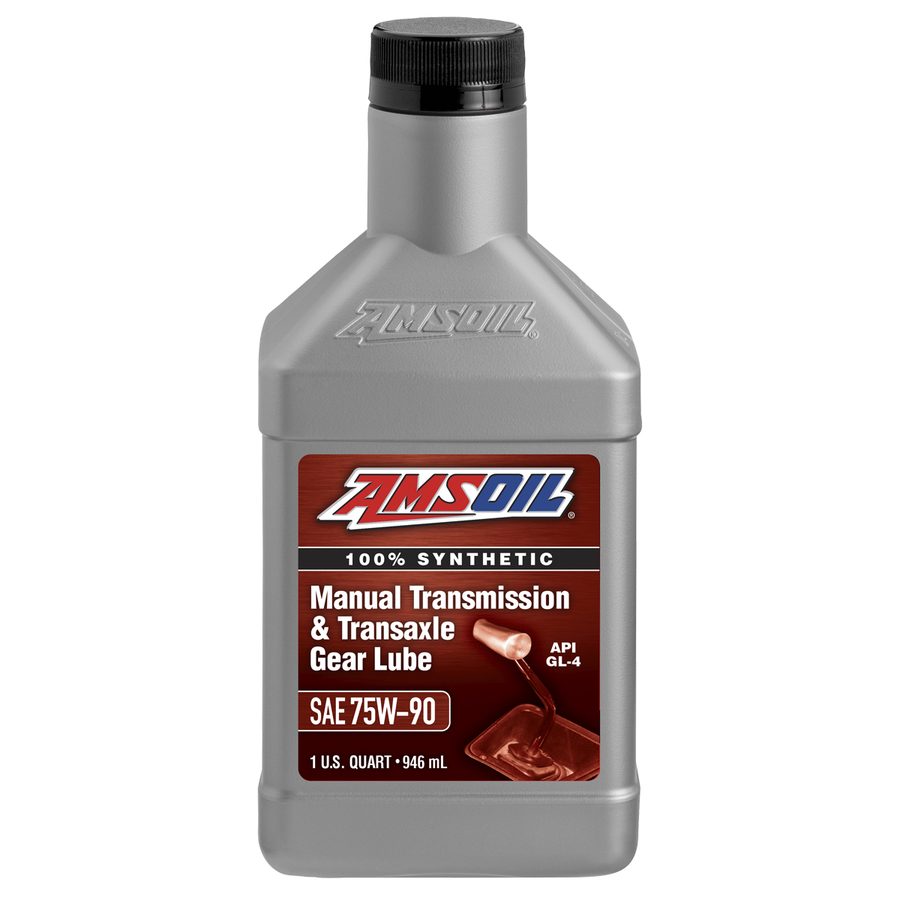
75W-90 synthetic gear lube for manual transmissions and transaxles that specify this grade. Keeps its film strength through highway miles, loaded hauling, and hot, hard-working gear sets.
View product
SAE 10W synthetic powershift transmission fluid for heavy equipment gearboxes, wet brakes, and hydraulic systems. Resists heat and oxidation through long operating hours in the field.
View product
SAE 30 synthetic powershift transmission fluid for equipment that specifies the middle grade. Holds viscosity and friction control under high load and rising sump temperatures.
View product
SAE 50 synthetic powershift transmission fluid for the heaviest equipment duty. Keeps its film strength when load, ambient heat, and continuous operation push lighter grades past their range.
View product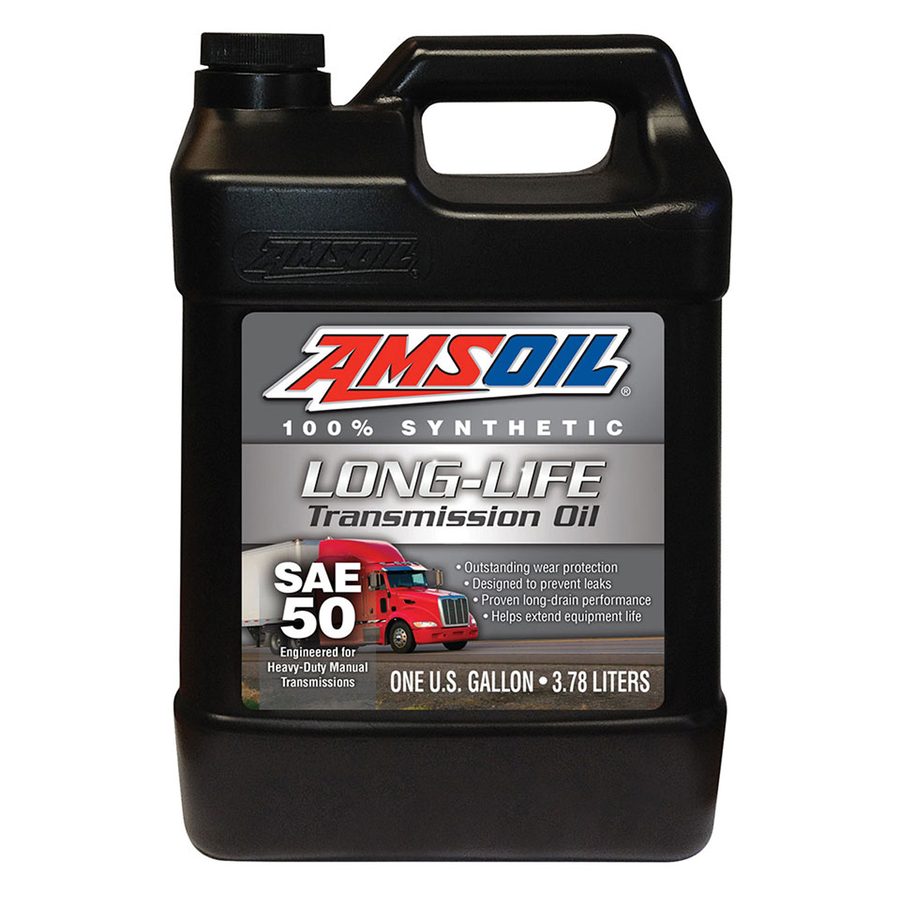
Long-life SAE 50 synthetic transmission oil for gearboxes that call for this specific product. Resists heat and oxidation so protection lasts through extended service where the application allows.
View productManual gearboxes are not all filled with the same kind of fluid. Some call for a synchromesh fluid, some call for a gear lube, and heavy equipment running a powershift transmission calls for a specific SAE grade. The requirement comes from the equipment, not from the vehicle class.
| Application | Formula | Details |
|---|---|---|
| Manual transmission or transaxle calling for a synchromesh fluid | Manual Synchromesh 5W-30 | View specs |
| Manual transmission, transaxle, or differential calling for 75W-90 gear lube | Manual Transmission Gear Lube 75W-90 | View specs |
| Powershift transmission specifying an SAE 10W grade | Powershift SAE 10W | View specs |
| Powershift transmission specifying an SAE 30 grade | Powershift SAE 30 | View specs |
| Powershift transmission specifying an SAE 50 grade | Powershift SAE 50 | View specs |
| Heavy-duty gearbox on an extended-drain SAE 50 schedule | SAE 50 Long-Life Transmission Oil | View specs |
This is the most common mix-up in manual transmission service. Both fluids go into a gearbox and both protect gear teeth, but they are built around different jobs. A synchromesh fluid is tuned for the friction behavior the synchronizer rings need in order to match shaft speeds during a shift, while a gear lube is built to carry heavy tooth loading.
Putting a gear lube into a gearbox that calls for Manual Synchromesh 5W-30 can make shifts notchy and slow, especially when cold. Putting a synchromesh fluid where the equipment calls for 75W-90 gear lube leaves the gear set without the film the design expects.
A manual gearbox on a cold morning is a fair test of the fluid. Conventional oils thicken as the temperature drops, and a thick fluid slows the synchronizers down, which shows up as a stiff, baulky shift into second until the drivetrain warms through.
Synthetic base oils stay more fluid at low temperature, so the synchronizers can do their job sooner after a cold start. That same stability works at the other end of the range, holding film strength when loaded hauling and long hours heat the gearbox up.
A powershift transmission changes gear under load without interrupting power, and in many machines the same fluid also serves hydraulic and wet-brake functions. Because it is doing several jobs at once, the manufacturer specifies a grade, and moving off that grade changes clutch engagement and brake behavior.
Powershift SAE 10W suits equipment specifying the lighter grade, SAE 30 covers the middle of the range, and SAE 50 is for machines calling for the heaviest grade. Where the schedule allows a longer interval, SAE 50 Long-Life Transmission Oil is built for extended service.
Manual transmission requirements vary widely between manufacturers, and two vehicles wearing the same badge with different gearboxes can call for different fluids. The specification list on each product page shows what that formula covers as published.
Confirm the year, make, model, and gearbox in the AMSOIL vehicle lookup guide, then match that result against the specification list. Equipment owners running a hydrostatic drive rather than a powershift transmission should look at hydrostatic transmission fluid instead.
A synchromesh fluid is tuned for the friction behavior synchronizer rings need to match shaft speeds during a shift. A gear lube is built to carry heavy gear-tooth loading. Both go into gearboxes, but they are not interchangeable, so fill whichever one the manufacturer specifies.
No. Substituting a gear lube where a synchromesh fluid is specified changes how the synchronizers behave, and it commonly produces notchy, slow shifts when cold. Check the requirement in the owner's manual and match it against the specification list on the product page.
Synthetic base oils stay more fluid at low temperature than conventional oils, so the synchronizers meet less resistance right after a cold start. That usually shows up as an easier shift into second before the drivetrain has fully warmed through.
The equipment manufacturer specifies the grade, because in many powershift machines the fluid also serves hydraulic and wet-brake functions. The powershift line covers SAE 10W, SAE 30, and SAE 50, so match the published requirement rather than choosing by preference.
Follow the manufacturer's interval for the service the vehicle or machine actually sees, since hauling and continuous duty fall under a severe schedule. Each product page lists the service-life guidance published for that specific formula.
No, they are different products for different machines, although a small number of manual gearboxes do specify an automatic transmission fluid. Check the owner's manual, and where it calls for an ATF, review the automatic transmission fluid lineup instead.