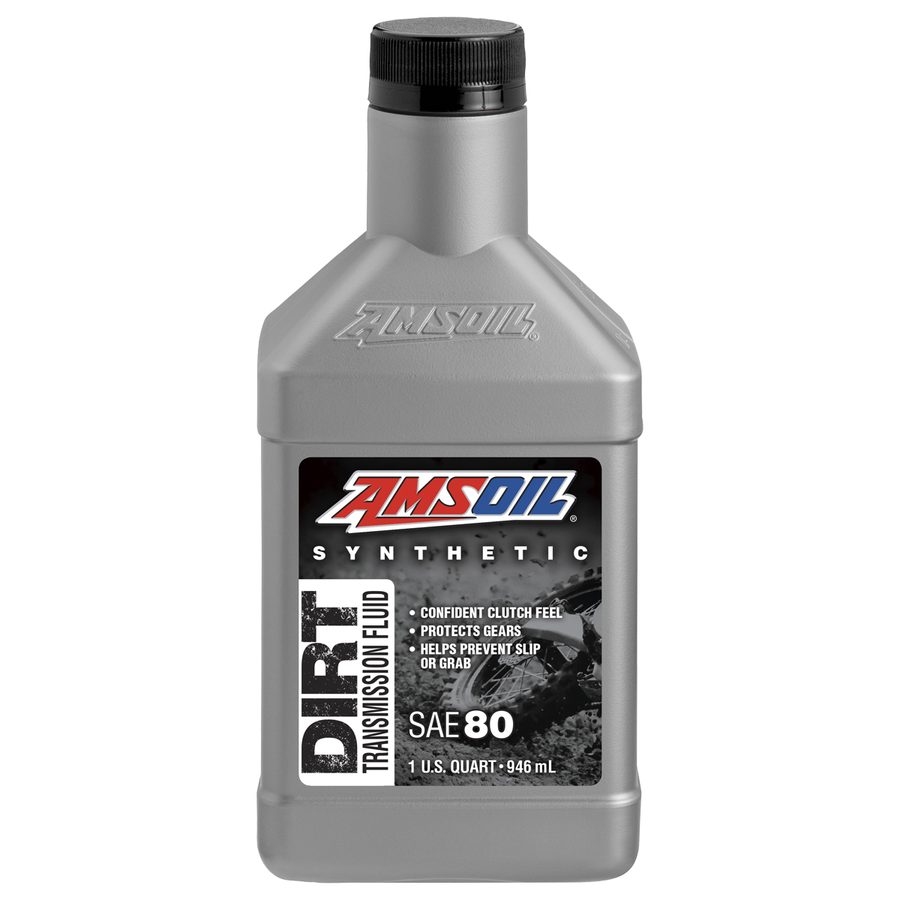
Dirt Bike Transmission Fluid
Synthetic dirt bike transmission fluid for separate gearboxes and wet clutches. Handles shock loads, mud, and hard shifting where passenger-car ATF chemistry does not belong.
View product

AMSOIL powersports transmission fluid is built for machines that share a sump with a wet clutch, where the friction modifiers in a passenger-car fluid can make the clutch slip. The synthetic formulas take shock loads, mud, water splash, and trail heat while keeping clutch feel and gear protection steady.
The line covers dirt bike transmission fluid, V-twin fluid for motorcycles with a separate gearbox, ATV and UTV transmission and differential fluid, single-fill powertrain fluid, and dedicated dual-clutch and CVT formulas. Pick the fluid that matches the machine, then compare specs and package sizes on each product page.
Confirm the match for the vehicle or equipment in the AMSOIL vehicle lookup guide, then compare the formulas below.
Synthetic dirt bike transmission fluid for separate gearboxes and wet clutches. Handles shock loads, mud, and hard shifting where passenger-car ATF chemistry does not belong.
View product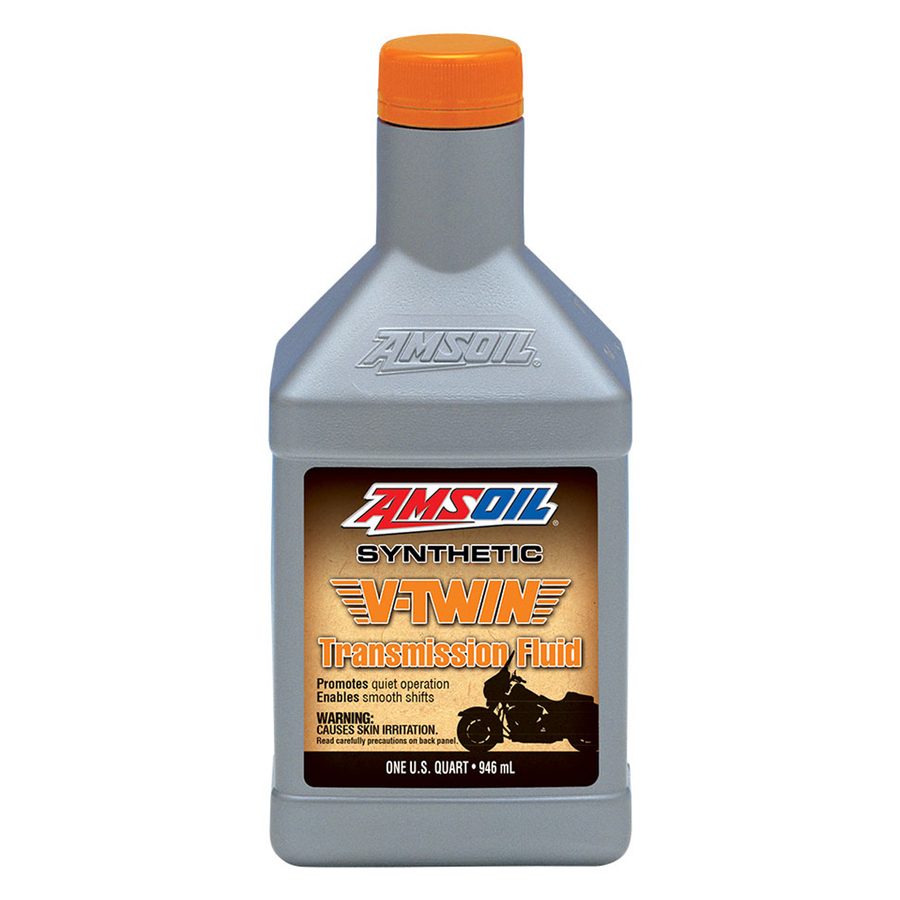
Synthetic V-twin transmission fluid for motorcycles that run a dedicated gearbox sump. Cushions gear teeth and keeps shift quality steady through highway miles and loaded touring.
View product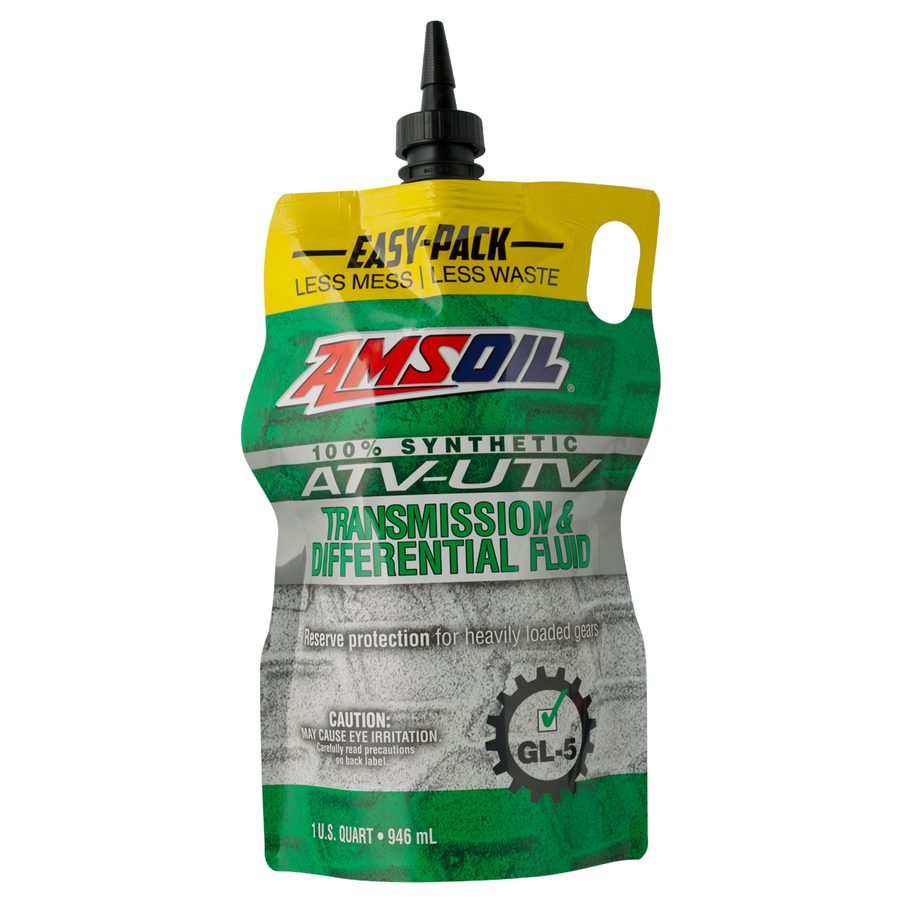
Synthetic ATV and UTV fluid for transmissions and differentials that share this fluid type. Protects gears and bearings through mud, water splash, and heavy trail loads.
View product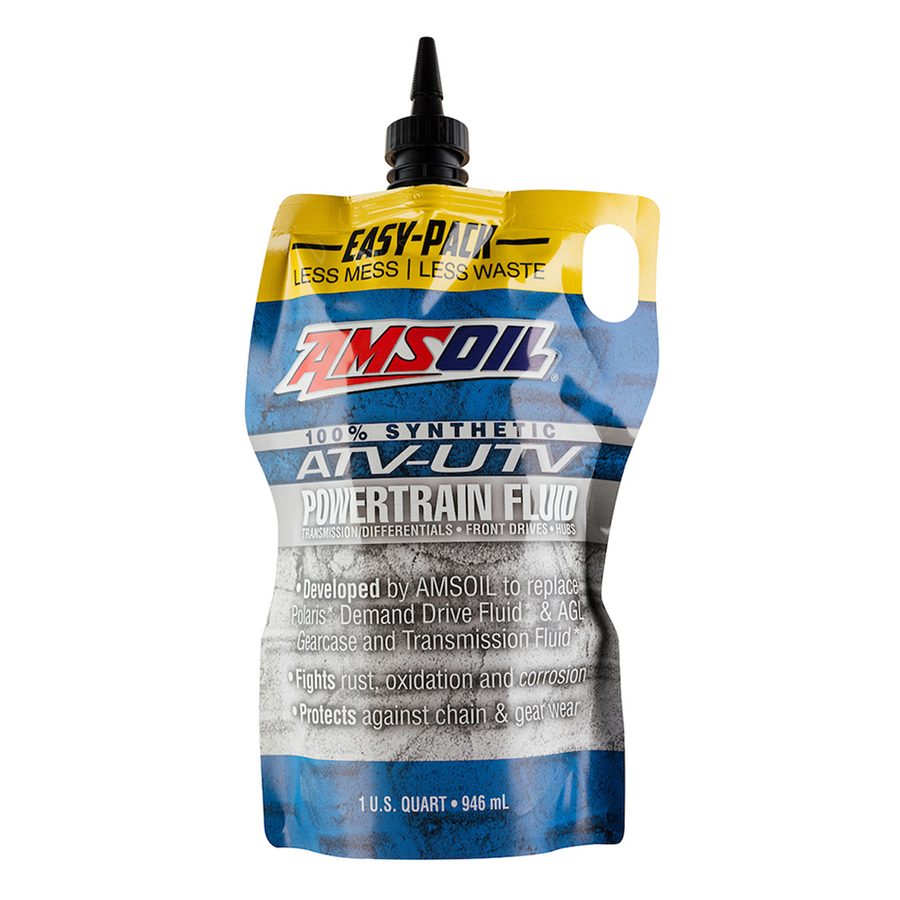
Synthetic powertrain fluid for ATVs and UTVs that run one fluid across the powertrain. Balances clutch, gear, and bearing protection in a single fill for the combined duty.
View product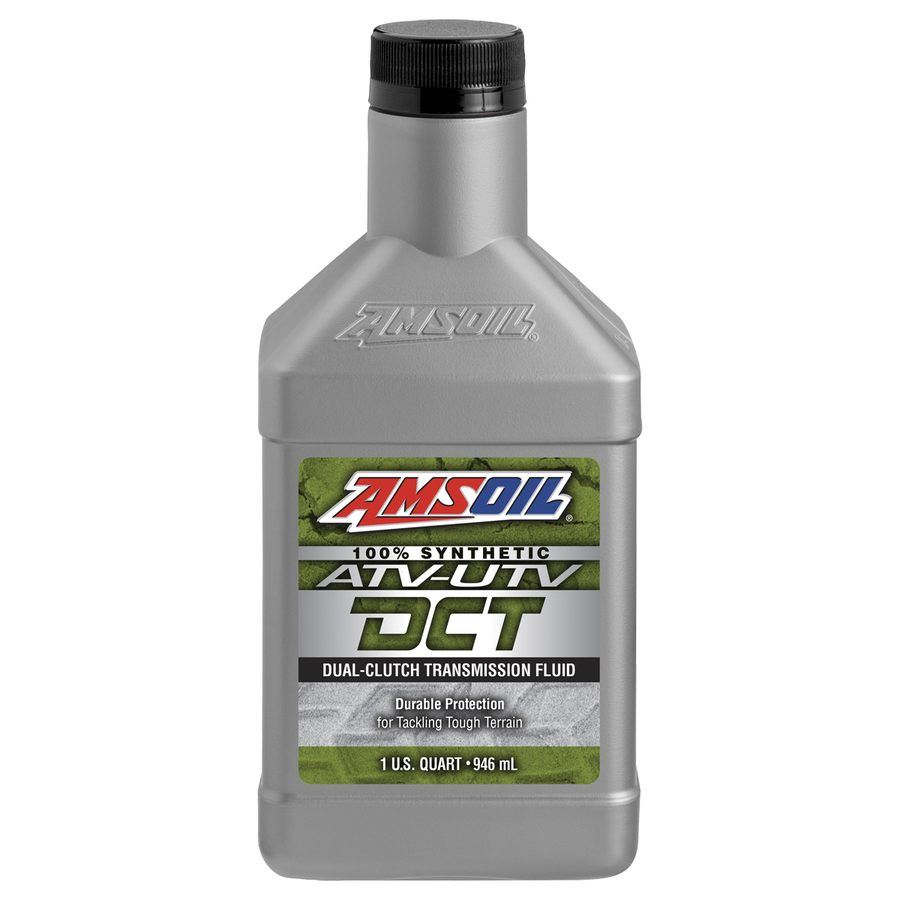
Powersports dual-clutch fluid for ATV and UTV gearboxes that need precise wet-clutch control. Built for trail heat and repeated shifts that a general-purpose gear lube cannot cover.
View product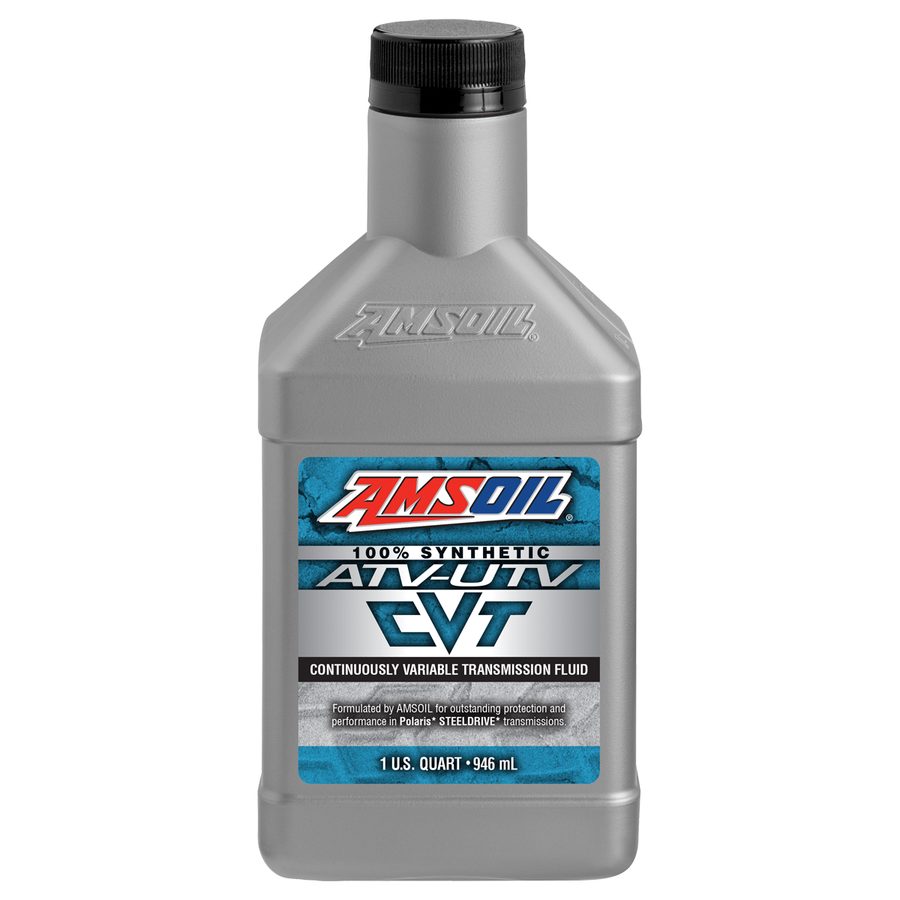
Synthetic CVT fluid for ATV and UTV belt-drive systems. The friction balance keeps belt power transfer clean while the synthetic base handles heat from mud, dunes, and loaded trail work.
View productPowersports machines vary more than cars do. Some share one sump between the engine, the gearbox, and a wet clutch, some keep the transmission separate, and some run a belt drive or a dual-clutch gearbox. Identify the compartment being filled before choosing a fluid.
| Machine and compartment | Formula | Details |
|---|---|---|
| Dirt bike gearbox running a wet clutch | Dirt Bike Transmission Fluid | View specs |
| V-twin motorcycle transmission | V-Twin Transmission Fluid | View specs |
| ATV or UTV transmission and differential | ATV/UTV Transmission and Differential Fluid | View specs |
| ATV or UTV sharing one powertrain sump | ATV/UTV Powertrain Fluid | View specs |
| ATV or UTV dual-clutch gearbox | ATV/UTV Dual-Clutch Transmission Fluid | View specs |
| ATV or UTV belt-drive CVT | ATV/UTV CVT Fluid | View specs |
Most passenger-car motor oils and automatic transmission fluids carry friction modifiers that help fuel economy by reducing friction. In a car that is an advantage. In a machine where a wet clutch runs in the same oil, those same additives can cause the clutch to slip, which feels like a loss of drive under throttle and wears the plates.
Powersports fluids are formulated without that conflict, so the clutch grips the way the manufacturer intended. This is the main reason a car product should not go into a dirt bike or a V-twin gearbox, even when the viscosity grade on the bottle looks like a match.
Many dirt bikes run one oil through the engine, the gearbox, and the clutch, so the fluid has to protect gear teeth and hold clutch feel at the same time while taking engine heat. Dirt Bike Transmission Fluid is built for that combination.
A V-twin motorcycle in the Harley-Davidson layout is the opposite case, keeping the engine, transmission, and primary chaincase in separate compartments with their own fills. V-Twin Transmission Fluid is the transmission-specific product in that layout rather than one fluid for all three.
Side-by-sides and quads are the easiest machines to get wrong, because one vehicle can have a transmission, a differential, a belt-drive CVT, and on some models a dual-clutch gearbox. Certain designs run a single shared powertrain sump, which is what ATV/UTV Powertrain Fluid serves.
Where the transmission and differential take their own fill, ATV/UTV Transmission and Differential Fluid is the match. A dual-clutch gearbox calls for ATV/UTV Dual-Clutch Transmission Fluid, and a belt-drive CVT calls for ATV/UTV CVT Fluid. The service manual confirms which compartments the machine actually has.
Trail machines live in conditions street vehicles never see. Water crossings and mud push moisture and grit against seals, low-speed crawling loads the drivetrain without much airflow, and a loaded side-by-side working in summer heat runs its fluid hot for hours at a stretch.
Hard riding can break an oil down over time and let it thin out, which is when gear and bearing protection starts to slip. Synthetic formulas resist that breakdown, and shortening the service interval after deep water crossings is cheap insurance next to a gearbox repair.
It is not a good idea. Passenger-car motor oils commonly carry friction modifiers that improve fuel economy, and in a machine where a wet clutch shares the oil, those additives can cause the clutch to slip. Use a fluid built for powersports wet-clutch service instead.
A wet clutch runs submerged in oil and relies on friction between its plates to transmit power. Additives that reduce friction, which help in a car engine, can make those plates slip rather than grip. Powersports fluids are formulated to keep clutch engagement consistent.
It depends on how the machine is built. Powertrain fluid serves designs running a single shared sump, while transmission and differential fluid is for machines where those compartments take their own separate fill. The service manual shows the layout.
No. Automatic transmission fluid is formulated for geared automatics in cars and light trucks, and it is not built around the wet-clutch friction requirement most powersports machines have. Match the fluid to the machine and to the compartment being filled.
It depends on the design. Many powersports CVTs are belt-drive systems with their own requirements, so check the service manual for whether the machine calls for a CVT fluid and which specification it names before ordering anything.
Follow the machine manufacturer's interval, and treat riding in mud, water, sand, or under heavy loads as severe service. Deep water crossings are a good reason to change early, because water in a gearbox does more damage than an early fluid change costs.